
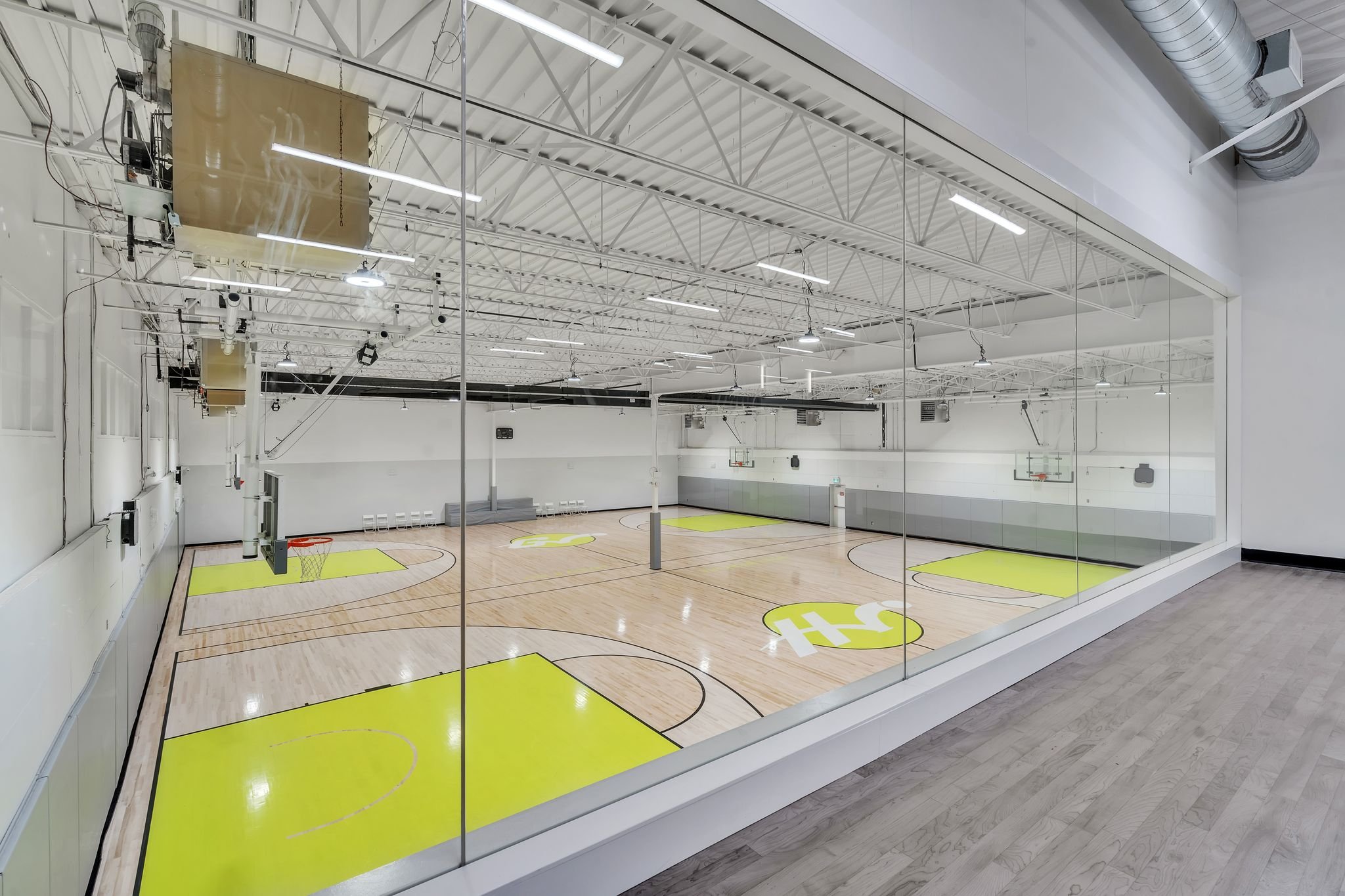
If you’re planning a new fitness center or a major renovation, one of the first real decisions you’ll make has nothing to do with equipment brands or floor plans. It’s how you want to build the thing.
Fitness center construction generally comes down to two paths: design-build, where one team handles design and construction under a single contract, or the traditional model, where you hire an architect first and bid the finished plans out to general contractors.
Both paths get you to a finished facility. They just get you there very differently, with different costs, different timelines, and different people responsible when something doesn’t go according to plan. Get this decision wrong, or make it too late, and you end up paying for it in change orders and delays long before you ever open the doors.
What Design-Build Actually Means for a Fitness Center Construction Project
Design-build puts design and construction under one roof, literally. Instead of hiring an architect and a general contractor separately, you sign a single contract with a design-build team that handles both. That team develops the concept, works out the engineering, and builds the facility, all under one point of contact.
For a fitness center build, that matters more than it might sound. Equipment loads, flooring systems, HVAC for cardio zones, plumbing for locker rooms and pools, and power requirements for strength and cardio equipment all need to be worked out together, not handed off in stages.
When the same team is designing and building, those details tend to get resolved earlier, before they turn into change orders once construction is already underway and much harder to fix.
How the Traditional Construction Model (Design-Bid-Build) Works
The traditional construction model, sometimes called design-bid-build, separates the same work into three distinct phases. You hire an architect to complete full design plans. Those plans go out to general contractors for competitive bids. Then you select a contractor and construction begins.
This model gives owners more control at each stage. You can review a finished design before anyone breaks ground, and competitive bidding can bring construction costs down on a well-defined project. It’s also the model most public and municipal projects are required to use, since open, competitive bidding is often written directly into procurement rules.
The tradeoff is time and coordination. Nothing gets built until design is fully finished, and once bidding starts, the contractor has no hand in shaping the plans they’re now responsible for building. If something doesn’t translate well from paper to the actual space, whether that’s a locker room that’s tighter than it looked on the drawing or an HVAC run that conflicts with equipment placement, the owner is often the one caught in the middle, negotiating between two parties who each have their own read on whose plan created the problem.
General Contractor vs. Design-Build: Where Accountability Sits
This is really the heart of the general contractor vs. design-build decision. In the traditional model, you’re managing two separate relationships, the architect and the general contractor, and you’re the one connecting them when priorities don’t line up. If a design detail turns out to be expensive or impractical to build, it isn’t always clear whose responsibility that is to fix, and disputes between architect and contractor can slow a project down at exactly the wrong moment.
Design-build removes that gap. One team, one contract, one party accountable for the finished facility matching the plan and the budget. It isn’t a perfect model either. Subcontractors are often preselected by the design-build team, which can limit competitive bidding at that level, and it’s worth confirming your design-build team carries the right design liability coverage, since that line can get blurry when one entity holds both roles. But for owners who want a single party to hold accountable from concept to completion, design-build solves a real coordination problem that the traditional model simply doesn’t.
What the Data Actually Shows on Cost and Schedule
It’s worth being honest about what the research actually says, because design-build isn’t a guaranteed win on every metric.
Studies have found design-build projects tend to move through the construction phase noticeably faster, in some analyses close to a third faster, with less schedule growth than comparable design-bid-build projects.
The cost is more mixed. Some studies show design-build coming in slightly under design-bid-build on cost growth. Others, particularly on larger and more complex projects, show design-build running higher on total cost, often because those projects tend to be bigger and more ambitious to begin with, not because the delivery method itself is more expensive. The honest takeaway is that design-build’s real advantage is speed and accountability, not a guaranteed discount, and cost performance still depends heavily on how well the project is defined going in.
Commercial Gym Construction: Which Model Actually Fits Your Project
Commercial gym construction has a few characteristics that make this decision more consequential than it might be for a simpler retail build-out. Fitness centers carry heavier equipment loads, more demanding mechanical needs, and specialized flooring and plumbing that all have to work together, not just sit next to each other on a drawing.
Design-build tends to be the stronger fit when:
- Timeline matters and you need to compress design and construction rather than run them back to back.
- The project involves specialized systems, like pools, spas, cardio zones, or strength areas, where equipment and infrastructure need to be planned together from the start.
- You want one team accountable for the finished result, not two teams pointing at each other if something goes wrong.
The traditional model still makes sense when:
- The project is straightforward and well-defined, without unusual mechanical or structural demands.
- Public funding or municipal procurement rules require competitive bidding, which is common for community and recreation center projects.
- You want to lock in a finished design and review it fully before selecting a builder.
Neither model is universally right, whether you’re building out a single corporate fitness center or a full amenity package inside a multifamily development. The better question is which one matches the project you actually have.
Choosing the Right Construction Delivery Method Starts Before You Pick a Builder
There isn’t a single best construction delivery method for every fitness center. The right choice depends on your timeline, your budget certainty, the complexity of the space, and whether you’re navigating a public bid process or working with a private developer who wants speed.
What matters most is making that decision with the full picture in front of you, before you’ve already committed to an architect or signed with a contractor. That’s the point where a lot of costly missteps get baked in, not during construction itself, but in the decisions made before the first permit is even pulled.
What matters most is making that decision with the full picture in front of you, before you’ve already committed to an architect or signed with a contractor. That’s the point where a lot of costly missteps get baked in, not during construction itself, but in the decisions made before the first permit is even pulled. It’s also around this same point that architects and developers typically bring a gym design consultant onto the team, a partnership we break down in Why Architects and Developers Partner With Gym Consultants, since that operational input has just as much bearing on how smoothly either construction model plays out.
This is exactly where LIVunLtd’s Consulting & Development team gets involved, well before ground is broken. We work through the design-build vs. traditional decision alongside owners and developers, help define scope and align stakeholders early, and make sure equipment planning and facility performance are part of the conversation from day one, regardless of which construction delivery method you end up choosing.
If you’re weighing a design-build fitness center construction project against a traditional build and want an operator’s perspective before you commit to either one, let’s talk.