
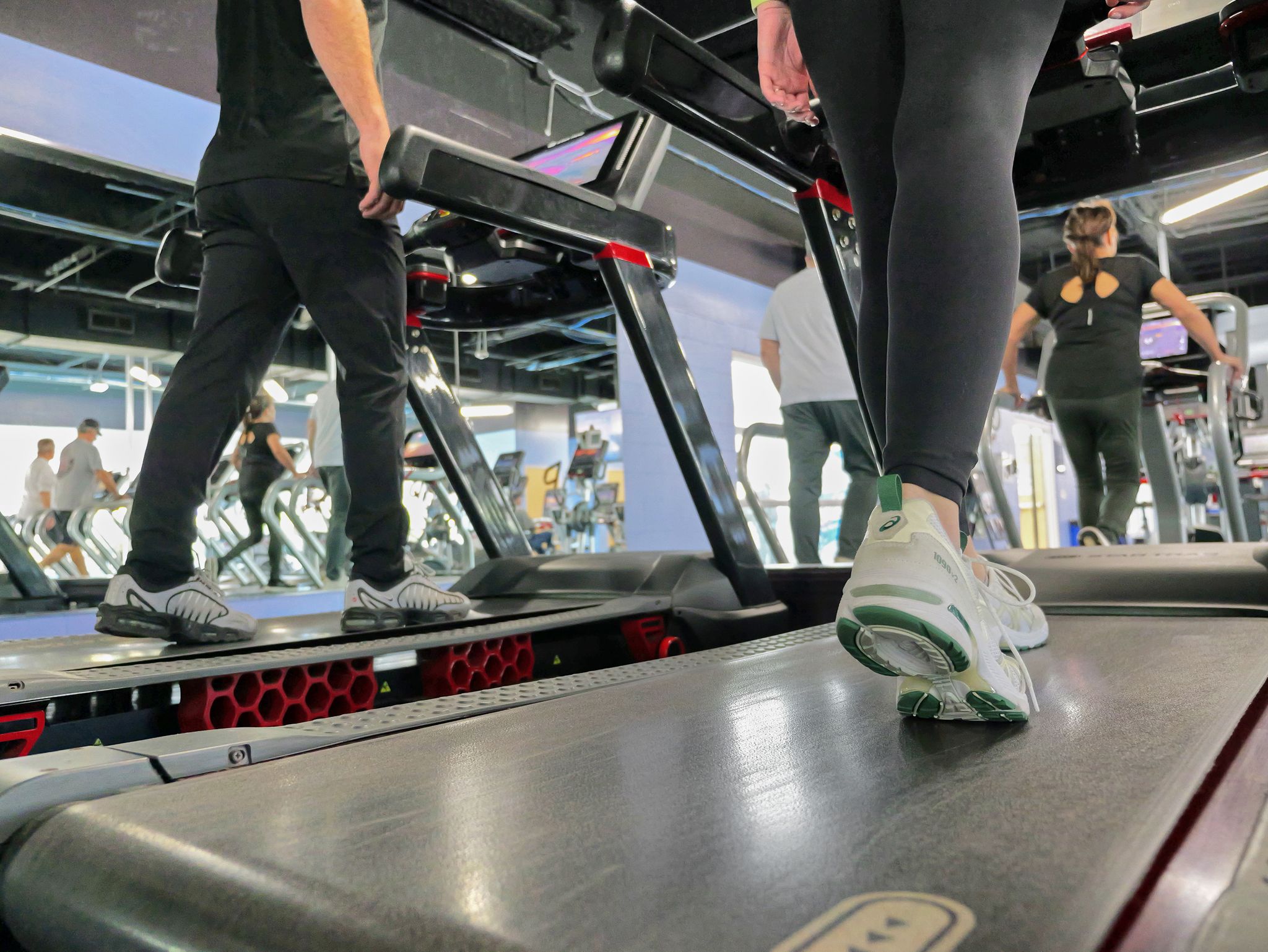
When a treadmill goes down in a commercial fitness center, the repair bill is rarely the expensive part. The expensive part is the out-of-order sign at 6 a.m., members stacking up on the machines that still work, and the email that lands in the property manager’s inbox before lunch. Before you search for treadmill repair near me and book whoever answers first, it helps to know what’s probably wrong, what kind of cost you are facing, and whether fixing it is even the right call.
We plan, equip, service, and manage fitness facilities, and our roots go back to 1978. Treadmills are the machines we get called about most. The same handful of failures show up across office towers, multifamily communities, campus rec centers, and hotels, and most of them trace back to something that could have been caught earlier.
Why Commercial Treadmills Fail Differently
A home treadmill might run a few hours a week for one or two people. A commercial treadmill in a busy amenity center can run most of the day for dozens of users. One walks at a steep incline, the next sprints intervals, the next leaves it running while they grab a towel. Every one of those sessions puts load on the same belt, deck, motor, and electronics.
Commercial units are built for that, with heavier frames, bigger motors, and thicker belts and decks. The tradeoff is that the parts cost more, many are specific to one manufacturer, and small problems grow faster because the machine never gets a rest. A belt that’s slightly out of tension at 20 hours a week is a frayed belt and a hot motor at 60.
That’s why commercial treadmill repair is less about the part and more about the cause. Many commercial treadmills track their run hours and distance in a service menu, and that history matters. A technician who checks hours, reads the error log, and measures how hard the motor is working will find the problem behind the problem. One who swaps the failed part and leaves will probably be back in a few months.
The Most Common Treadmill Problems and Where They Fall on Cost
Below are the problems we see most often on commercial treadmills, what causes them, and where each one usually falls on the cost scale. We break down those cost levels, and what moves a repair from one to the next, in the section that follows.
Belt slipping, drifting, or hesitating
This is the call we get most, and it’s a minor repair if somebody reports it early. A belt that slips under a footstrike, walks to one side, or hesitates when the speed changes is usually a tension or tracking issue. A technician adjusts the rear roller to center the belt and set the right tension, often in one visit.
Ignore it for a month and the bill changes. The belt edges fray, the deck wears unevenly, and the motor works harder on every stride. At that point you’re looking at a running belt replacement, and putting a new belt on a worn deck shortens the life of the new belt. If the deck is worn, plan to deal with both. On some models the deck can be flipped once to use its second side, which is worth asking about before you price a new one.
Belt and deck friction
Friction between the belt and deck is the quiet cause behind a lot of expensive treadmill repair. As the belt and deck wear, or the lubricant wears off, the motor has to pull harder to move the belt. That extra current draw heats the motor and the motor control board. This is why a friction problem rarely shows up as a friction problem. It shows up months later as a dead board.
The fix depends on the machine. Some commercial treadmills need periodic lubrication, and others use belt and deck systems designed to run without it. Adding the wrong product, or lubricating a system that was never meant to have it, can damage both surfaces. A technician who knows your brand should know which one you have and check the current draw with a meter instead of guessing from the sound.
Motor control board failures
The motor control board, often called the lower board or controller, manages power to the drive motor. When it fails, the treadmill may not start, may shut off under load, or may throw an error code at speed. The board is often the single most expensive electronic part on the machine, which puts this firmly in major repair territory.
Boards rarely fail on their own. Power issues, heat, and belt and deck friction are the usual reasons. When a board is replaced, ask what caused the failure and what was done about it. If the answer is “nothing,” budget for another board.
Drive motor problems
A failing drive motor shows up as surging speed, a burning smell, loud humming, or a treadmill that bogs down under heavier users. Motor replacement is one of the most expensive repairs on any treadmill, and on a commercial unit it costs considerably more than the same repair on a home machine. Some motors have brushes that can be serviced before a full replacement, so get a proper diagnosis before you approve the bigger job.
Incline that sticks, drifts, or won’t calibrate
Incline problems range from a calibration issue a technician can reset in a few minutes to a failed incline motor or damaged lift assembly. Members notice them right away, because the display says one grade and the deck says another. Incline calibration is part of a normal preventive maintenance visit on most machines, which is one reason facilities on a schedule rarely see this one escalate.
Console, display, and error codes
Blank screens, dead buttons, and error codes often trace back to a loose connection, a damaged data cable between the console and the lower board, or moisture from sweat and cleaning sprays. A reseated connector or new data cable is a moderate repair at most. A replacement touchscreen or connected console costs considerably more. Before you call anyone, write down the exact error code, the model, and the serial number. It cuts diagnostic time and often tells the technician which part to bring.
Power and electrical issues
Tripped breakers, random shutdowns, and repeat board failures often come back to how the treadmill is powered. Most commercial treadmills call for their own dedicated circuit, often 20 amps depending on the model, and some run on 208 or 240 volts. Machines sharing a circuit or plugged into extension cords are working against their electronics every day. That’s one reason power planning is on our fitness center design checklist. Electrical codes vary by country, state, and province, so if the problem is the building’s wiring, you need a licensed electrician, not a treadmill technician. A good technician will tell you that.
Noise from rollers, bearings, and the drive belt
Squeaking, clicking, and grinding usually point to worn roller bearings, a worn or loose drive belt, or dust and debris built up under the motor hood. A drive belt is one of the less expensive parts on the machine. Bearing wear left alone can damage the rollers themselves, and that turns a moderate repair into a bigger one.
Safety stop and emergency key problems
If the emergency stop or safety key isn’t working, take the treadmill out of service until it’s fixed. There’s no cost conversation here. Safety requirements for treadmills, including stop functions, are set out in the international standard ISO 20957-6, and commercial manufacturers design around it. A treadmill that can’t stop safely is a liability for the owner, not an inconvenience for the member.
What Drives Treadmill Repair Costs
We don’t publish a price list, because repair costs vary too much from market to market to be useful as one number. Repair costs vary across markets in the U.S. and Canada, from one brand to the next, and with how quickly parts can get to your building. Most published price ranges are also based on home treadmills, which use lighter, less expensive parts than commercial machines. What does hold true everywhere is how repairs group by cost, and what pushes a repair from one group to the next.
Minor repairs
Belt tension and tracking adjustments, incline calibration, tightening hardware, clearing dust from under the motor hood, and reseating a loose console connection. These are usually handled in a single visit and often fit inside a preventive maintenance call. Caught early, most treadmill problems start here.
Moderate repairs
Parts replacement on wear items: a running belt, a drive belt, rollers or bearings, a data cable, or a minor console repair. The part matters, but so does labor time, because some of these jobs mean taking the deck or motor hood apart.
Major repairs
A motor control board, a drive motor, an incline motor, a touchscreen console, or a belt and deck replaced together. These are the repairs where it’s worth stopping to ask whether the machine should be repaired at all, and where getting the root cause right matters most. Replacing a board without fixing the friction that burned it out just schedules the next major repair.
What moves the price
A few things decide where a repair lands and how much it costs within that range:
- Commercial vs. home parts. Commercial belts, decks, motors, and boards are built heavier and cost more.
- Proprietary parts. Many commercial parts only come from the manufacturer, so you have fewer places to buy from and longer waits when something breaks.
- Parts availability. Older or discontinued models can mean longer waits, used parts, or no parts at all.
- How early it was caught. If you adjust a slipping belt this week, it’s a quick, inexpensive repair. Leave it for a month and the extra friction can wear out the deck too, and in some cases damage the motor control board.
- Warranty and service agreements. Coverage can change what you pay for parts, labor, or both.
- Whether the root cause gets fixed. Paying once for the right diagnosis costs less than paying twice for the same part.
And then there’s downtime. For a commercial facility, the hidden cost of a broken treadmill is usually larger than the invoice: members waiting at peak hour, complaints at the front desk, and a fitness center that looks neglected to residents, tenants, or guests. That’s why speed and first-visit fixes matter as much as the price of the part.
Repair or Replace: How to Make the Call
Not every treadmill is worth fixing. Before we recommend a major repair, we look at the machine’s age and run hours, how easy it is to get parts, its repair history, and what the repair costs compared to a replacement unit.
A commercial treadmill near the end of its service life may need a second major repair soon after the first. Older or discontinued models can wait weeks for parts, and that downtime has its own cost. Repeat failures of the same part usually mean the cause was never fixed, or the machine is done. And when one repair starts to approach a meaningful share of the price of a new unit, replacement deserves a real look.
Downtime belongs in that math too, and it’s usually why people search for treadmill repair near me in the first place. A treadmill waiting three weeks for a back-ordered board costs you in member experience every one of those days. How fast a provider can get a technician and the right part to your building depends on where their people are based.
When replacement is the right answer, plan it instead of reacting to it. Phasing cardio replacements over a few budget cycles keeps the floor full and the capital predictable. Because our fitness equipment sales team works alongside our service technicians, the people recommending a replacement are the same people who have been keeping that machine running. Our recommendations stay brand-neutral either way.
Preventive Maintenance Is the Cheapest Treadmill Repair
Most of the expensive failures above start as small problems nobody logged. A belt that drifted for a month. A motor that ran hot on a worn deck. A console sprayed with cleaner every night.
A preventive maintenance visit on a commercial treadmill should include belt tension and tracking, belt and deck wear checks, a motor current reading, cleaning under the motor hood, roller and bearing checks, incline calibration, a safety stop and emergency key test, and an update to that machine’s service record. The schedule should be based on run hours and the manufacturer’s requirements, not a generic calendar. A treadmill in a busy downtown office tower and one in a quiet residential amenity room shouldn’t be on the same plan.
Your onsite team has a role here too. Staff who wipe down equipment every day are the first to notice a belt that sounds wrong or a console that flickers. The question is where their job ends and a technician begins, and getting that line wrong can void a warranty.
Our fitness equipment service programs are built around usage, follow manufacturer requirements so warranties stay intact, and cover all major commercial brands through one partner. That is the One-Partner Advantage applied to the equipment floor: one service history, one point of contact, and no gaps between who sold it, who maintains it, and who manages the space.
Treadmill Repair Near Me: Frequently Asked Questions
How do I find reliable treadmill repair near me?
Look for a provider with commercial experience on your brands, technicians based in your area, and a habit of explaining why a part failed. Ask for a written service report after every visit. Distance matters, but a technician who fixes it on the first trip is worth more than one who is ten minutes closer.
How much does treadmill repair cost?
It depends on the repair, the brand, where you are, and how early the problem was caught. Adjustments and calibration are minor repairs that often fit inside a service visit. Belts, rollers, and minor console work are moderate. Motor control boards, drive motors, and belt and deck replacements are major repairs, and commercial parts cost more than home treadmill parts across the board. The most reliable way to know is a diagnosis on the actual machine.
Is it worth repairing a commercial treadmill?
Usually, yes, if the frame is sound, parts are available, and the repair is a fraction of replacement cost. If the machine is near the end of its service life or keeps failing the same way, replacement is often the better use of the money.
How often should someone service your commercial treadmills?
It depends on run hours and the manufacturer’s requirements. The more people use the equipment, the more often it needs service, so a busy gym needs more visits than a quiet apartment fitness room. A schedule based on actual use holds up better than a fixed calendar.
Can one company service treadmills from different brands?
Yes. Most commercial facilities run more than one brand. One partner who services all of them keeps the records, scheduling, and accountability in one place.
Get Treadmill Repair Near You From a Team That Runs Facilities Too
If you’re searching for treadmill repair near me because a machine is down right now, call our service team at 844-338-9900. If you’re tired of paying for the same repair twice, let’s look at a maintenance plan built around how your facility actually runs. Request a proposal and we’ll start with what is on your floor today.